
At the Annual Shareholders' Meeting, Colbún Chairman Hernán Rodríguez called for urgent modernization of Chile's electricity regulatory framework, outlining three priority areas: institutional modernization, energy security, and system efficiency. The company also reported Q1 2026 revenues of US$408.5 million, with EBITDA impacted primarily by the pipeline emergency in Peru.
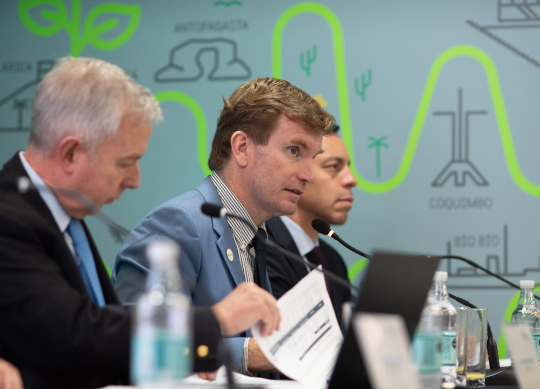

● At the Annual Shareholders' Meeting, Hernán Rodríguez warned of the urgent need to advance a modern and robust regulatory agenda to address the challenges facing the electricity system.
Santiago, April 2026.- Colbún Chairman Hernán Rodríguez called for decisive action on the modernization of the electricity sector's regulatory framework in his address at the company's Annual Shareholders' Meeting, stressing the urgent need to tackle the challenges facing the industry. “In an environment of growing operational and regulatory complexity, we need to move from diagnosis to action, so that the electricity system once again places users at the center and recovers the legitimacy that has come under strain in recent times,” he stated.
The executive warned that recent events, such as the February 2025 blackout and tariff errors, have exposed significant gaps in the system's functioning, eroding public trust and underscoring the need to strengthen the sector's institutional framework. He emphasized that the development of the electricity system requires a regulatory agenda that is modern, technically grounded, and consumer-focused, capable of balancing supply security, sustainability, and competitiveness. “Chile has a unique opportunity to leverage the growing availability of renewable energy to drive its development, accelerate the electrification of its economy, and strengthen its competitiveness. But to do so, we need a regulatory framework that is equal to these challenges,” he affirmed.
Three priority areas for a regulatory agenda
During his address, the Colbún Chairman outlined three priority areas to advance this agenda. First, he highlighted the need for institutional modernization, strengthening the technical capabilities and independence of regulatory bodies from political cycles, enabling them to respond to the growing complexity of the electricity system.
Second, he underscored the importance of advancing energy security and resilience, properly incorporating new technologies such as storage and recognizing the backup role of sources such as natural gas. “The energy transition must be responsible, always safeguarding the continuity and security of supply,” he noted.
Finally, he proposed as a third axis the efficiency and competitiveness of the system, calling for a reduction in regulatory distortions and systemic costs affecting users, moving toward more competitive prices and better utilization of available energy.
The role of investment and a long-term vision
Rodríguez also highlighted the key role of investment in the country's development, noting that growth is a challenge that must be addressed with a long-term perspective and as a collective effort.
“The challenge of growth does not belong to any particular government, but to the country as a whole. It requires consistency over time, clear rules, and a broader understanding of the role that investment plays in society, in terms of job creation, opportunities, and well-being for people,” he stated.
He also emphasized the responsibility of companies to develop their projects to high technical, social, and environmental standards, along with transparent communication of the benefits for society.
Financial results
Prior to the Annual Shareholders' Meeting, the company released its Q1 2026 financial results. During the period, Colbún recorded revenues of US$408.5 million, representing a slight 1% decrease compared to the same period in 2025, while EBITDA reached US$132.6 million, 26% lower than the same period the previous year.
These results are primarily explained by an increase in the cost structure, mainly due to the impact of the emergency situation in Peru, where a failure in the Transportadora de Gas del Perú (TGP) pipeline completely interrupted the gas transportation system for 13 days in March, forcing Fenix Power to replace gas-fired generation with diesel, resulting in a significant increase in system marginal costs.
Additionally, so far in 2026, Colbún has signed energy sales contracts totaling more than 1 TWh per year.